
Voices of Youth Justice: When Community-Based Organizations Are Supported, Youth Thrive
Voices of Youth Justice: When Community-Based Organizations Are Supported, Youth Thrive
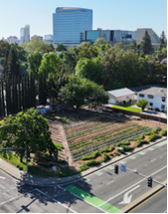
“In my tradition as a Native Indigenous person, our wealth isn’t determined by how much we have. It’s by how much we give away,” said Alfred Melbourne, founder and director of Three Sisters Gardens. “Instilling that into our youth means showing them that we’re not part of a take-economy. We’re building pathways and bridges of support for one another.”
That commitment to care, connection, and community reflects the role that Community-Based Organizations (CBOs) play across California in supporting youth impacted by the justice system. CBOs are often deeply rooted in their communities, pairing strong relationships with programs, services, and opportunities that help set young people up for success within and outside of the justice system, whether that means providing fresh food grown by youth themselves, educational support through higher education, or programming that helps young people build career skills. Yet, many organizations operate without the stable funding, staffing, or infrastructure needed to sustain their work. OYCR and the Sierra Health Foundation created the Community-Based Organization Capacity Building Initiative (CBO-CBI) to fill that gap by providing organizations with the tools and funding they need to serve young people in their communities.

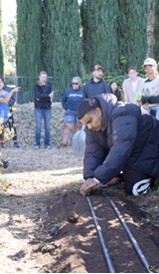
At Three Sisters Gardens, an urban farming program in West Sacramento where young people learn to grow food and care for their community, change becomes visible in everyday moments. Alfred Melbourne remembers a young leader who was once hesitant to speak publicly at community events. As the young farmer grew his leadership skills through learning to grow new vegetables, building garden beds, and eventually teaching his peers, his confidence grew just as steadily. Now, with years in the program behind him, he steps forward as a leader with ease, sharing his story with peers at Three Sisters Gardens and events across his community. For Melbourne, moments like this show the impact of support from the CBO Capacity Building Initiative: young people gaining practical skills and a stronger sense of themselves, cultivated alongside the fruits and vegetables they help grow.
Tommy Morris, who co-chairs the Initiative and serves as a Program Officer at the California Wellness Foundation, came to this work through his own lived experience in the justice system. After incarceration, he built a career in youth advocacy and philanthropy, driven by a belief that those closest to the justice system hold unique perspective and credibility as a part of the state’s shift to healing-centered approaches. When OYCR began developing the CBO Capacity Building Initiative, colleagues familiar with Tommy’s leadership and relationship-building invited him to help guide the effort. For Tommy, supporting Community-Based Organizations like Three Sisters Gardens starts with recognizing what they already bring to their communities.
“The value [CBOs bring] is the connection to the youth,” he explains. These groups are already doing the work, often without the infrastructure or support that larger institutions have. The initiative is designed to strengthen that foundation. The goal is to “increase their visibility, increase their capacity, and give them what they need to continue the work.”
The CBO Capacity Building Initiative provides multi-year support, including tailored technical assistance, peer learning, and guidance to strengthen areas such as staffing, program development, financial practices, and data tools. Organizations also participate in regional learning opportunities that expand trauma-responsive, developmentally appropriate services for young people. For some CBOs, this support makes it easier to partner with counties or access public funding. For others, it helps refine programs or build collaborations that extend their reach. Across all of this work, the initiative is designed to meet organizations where they are and strengthen their ability to offer consistent, culturally rooted, healing-centered support to youth impacted by the justice system.
Organizations across the state are putting that support to work in ways that reflect their communities’ needs. At Kindful Restoration in Riverside, supported by OYCR’s Capacity Building Initiative, that has meant building a youth-centered, dignity-first approach shaped by co-director Ernesto Rodriguez’s lived experience of incarceration, recovery, and reentry. Young people are referred through probation, managed care plans, community partners, or by self-referral, and once they arrive, the team works with them to understand what they need—whether that’s support with school, transportation, food access, or placement in one of the organization’s many programs, including anger management, substance use counseling, domestic violence counseling, community service, employment pathways, and enhanced care management. What sets Kindful Restoration apart is its flexibility: staff design plans around each young person’s goals. For example, staff will drive youth to Kindful Restoration programming if transportation is a barrier, punitive community service is replaced with creative or restorative opportunities, and staff work to address urgent, basic needs like hunger or housing. Their “mindful kindness” model weaves emotional skills-building with opportunities for young people to contribute to their communities, and many participants go on to earn certifications in peer support or community health work.
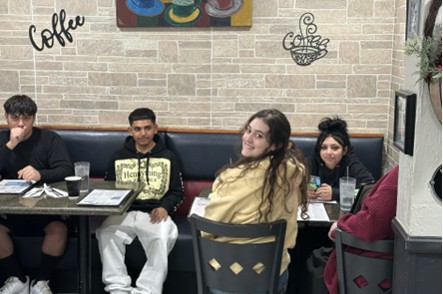
Much of the organization’s impact comes from its ability to respond quickly to young people’s needs. Ernesto recalls a recent moment when a young person shared that her family’s SNAP benefits had been paused, and there was no food at home. Several others in the group were experiencing similar challenges. “We stopped everything,” Ernesto explained. The team assembled care packages, connected families to emergency resources, and shifted programming to meet the basic needs young people were expressing in real time—an example of how Kindful grounds its services in listening and responsiveness.
OYCR’s investment has helped make this kind of support possible at scale. Kindful Restoration grew from four staff members to more than fourteen, expanded from a single office to multiple sites, secured multi-year county and managed care contracts, and significantly increased its ability to serve youth and families. “Without that guidance, without those questions being answered, without providing funds…we wouldn’t be doing what we’re doing today at the level that we’re doing it,” Ernesto said.

Looking ahead, strengthening community-based supports for youth remains essential because young people thrive when the adults and organizations around them have the resources to promote their growth. The results from CBOs—where young people are supported to enroll in school, receive the leadership development they need to decide on their future paths, and have their basic needs met—paint a picture of the success that California has seen with its shift to a restorative youth justice system framed by accountability and healing. OYCR’s investment ensures those supports are stable, culturally rooted, and shaped by what young people and families say they need. By investing in the people doing this work every day, OYCR is helping create a justice system where community organizations can nurture young people’s strengths and build environments where youth feel seen, uplifting, and ready to succeed.